
The Christian History of St Patrick
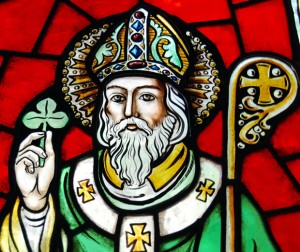
Patrick was 16 years old in about the year 405, when he was captured in a raid and became a slave in what was still radically pagan Ireland. Far from home, he clung to the religion he had ignored as a teenager. Even though his grandfather had been a priest, and his father a town councilor, Patrick “knew not the true God.” But forced to tend his master’s sheep in Ireland, he spent his six years of bondage mainly in prayer. He escaped at the suggestion of a dream and returned home.
Patrick was in his mid-40s when he returned to Ireland. Palladius had not been very successful in his mission, and the returning former slave replaced him. Intimately familiar with the Irish clan system (his former master, Milchu, had been a chieftain), Patrick’s strategy was to convert chiefs first, who would then convert their clans through their influence. Reportedly, Milchu was one of his earliest converts.
Over the years, thousands of people were converted including many kings and leaders of the people. “An unquenchable burning desire for bringing souls to Christ was the passion of Patrick’s life.”[10] In addition to multitudes of converts, Patrick worked to bring transformation in all spheres of life:
- He saw untold thousands converted.
- He founded 700 churches.
- He trained and set in place Church leadership — 700 bishops and 3000 ministers.
- He set up training centers to educate thousands.
- He transformed civil government, working with kings to establish godly laws. He wrote the Liber Ex Lege Moisi, which were extracts from the Laws of Moses. He directed the compilation of the laws known as Senchus Mor, revising old laws in accordance with Biblical precepts. Liber and Senchus Mor became the basis for civil law in Ireland.
Though he was not solely responsible for converting the island, Patrick was quite successful. He made missionary journeys all over Ireland, and it soon became known as one of Europe’s Christian centers. This, of course, was very important to fifth-century Christians, for whom Ireland was one of the “ends of the earth.”
Find out more about Patrick in Christian History issue 60: Celtic Christianity and much more detailed information at this link: Providence Foundation